





Key Takeaways
- Moustache laser hair removal targets the pigment in facial hair with pulses of light, reducing regrowth over a course of sessions.
- It works best on brown or black hair. Gray, white, and blonde hair holds little pigment and is often not suitable.
- Most people describe the feeling as a warm pinprick or a light rubber band snap, and treating the upper lip takes only a few minutes.
- Laser offers permanent hair reduction, a long-term drop in regrowth rather than total removal, and occasional maintenance keeps the area clear.
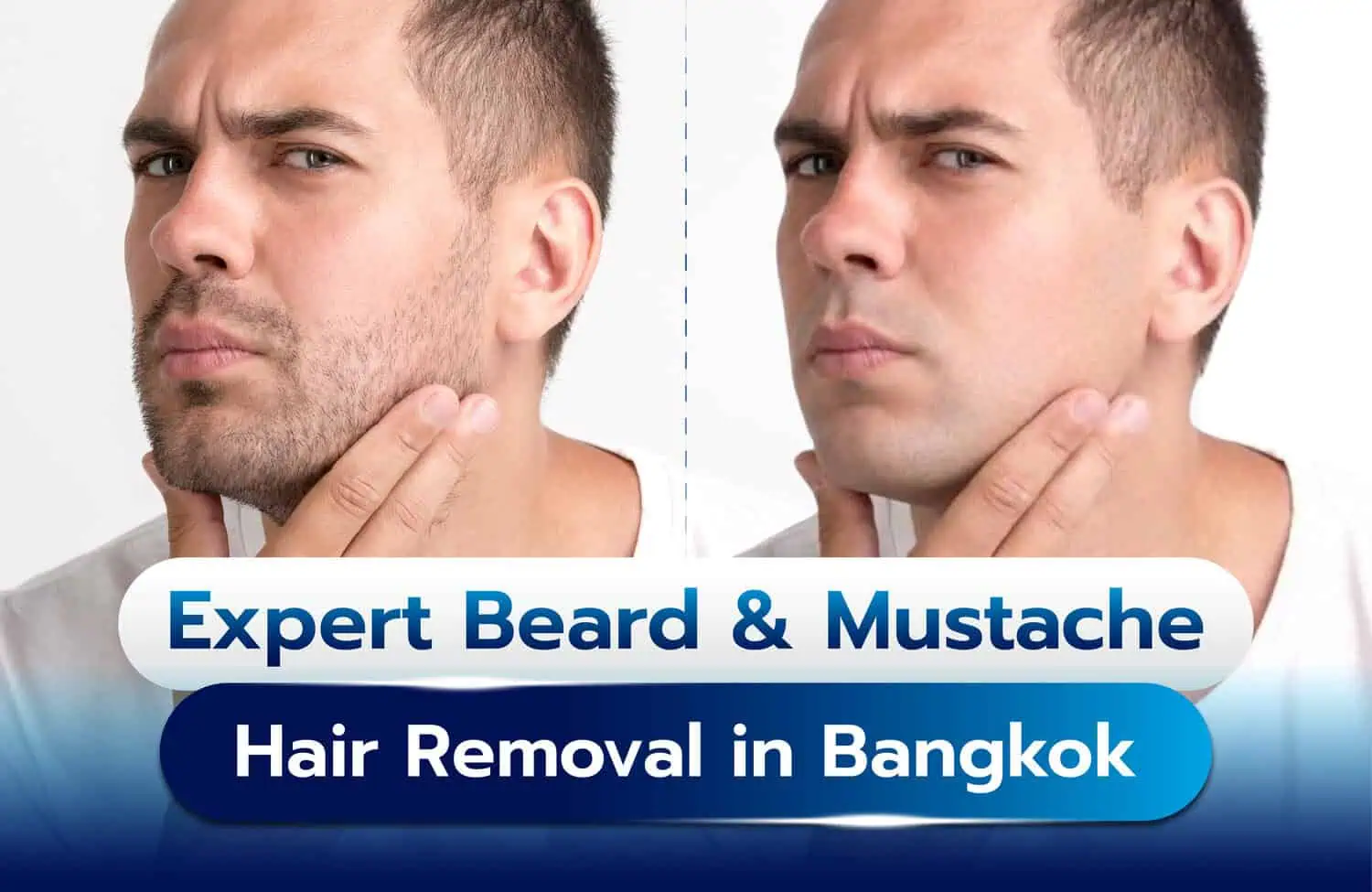
Moustache laser hair removal uses pulses of light to target the pigment in facial hair, reducing regrowth over a course of sessions so the upper lip stays smoother for longer. It can clear the lip fully or shape a sharper beard line. This guide covers how it works, who it suits, the price, comfort, and how long results last.
What Beard and Moustache Laser Hair Removal Is
Beard and moustache laser hair removal is a medical treatment that aims a focused beam of light at the hair follicle. The pigment in the hair absorbs the light, turns it into heat, and that heat damages the follicle enough to slow or stop it producing new hair. The surrounding skin is left as untouched as possible.
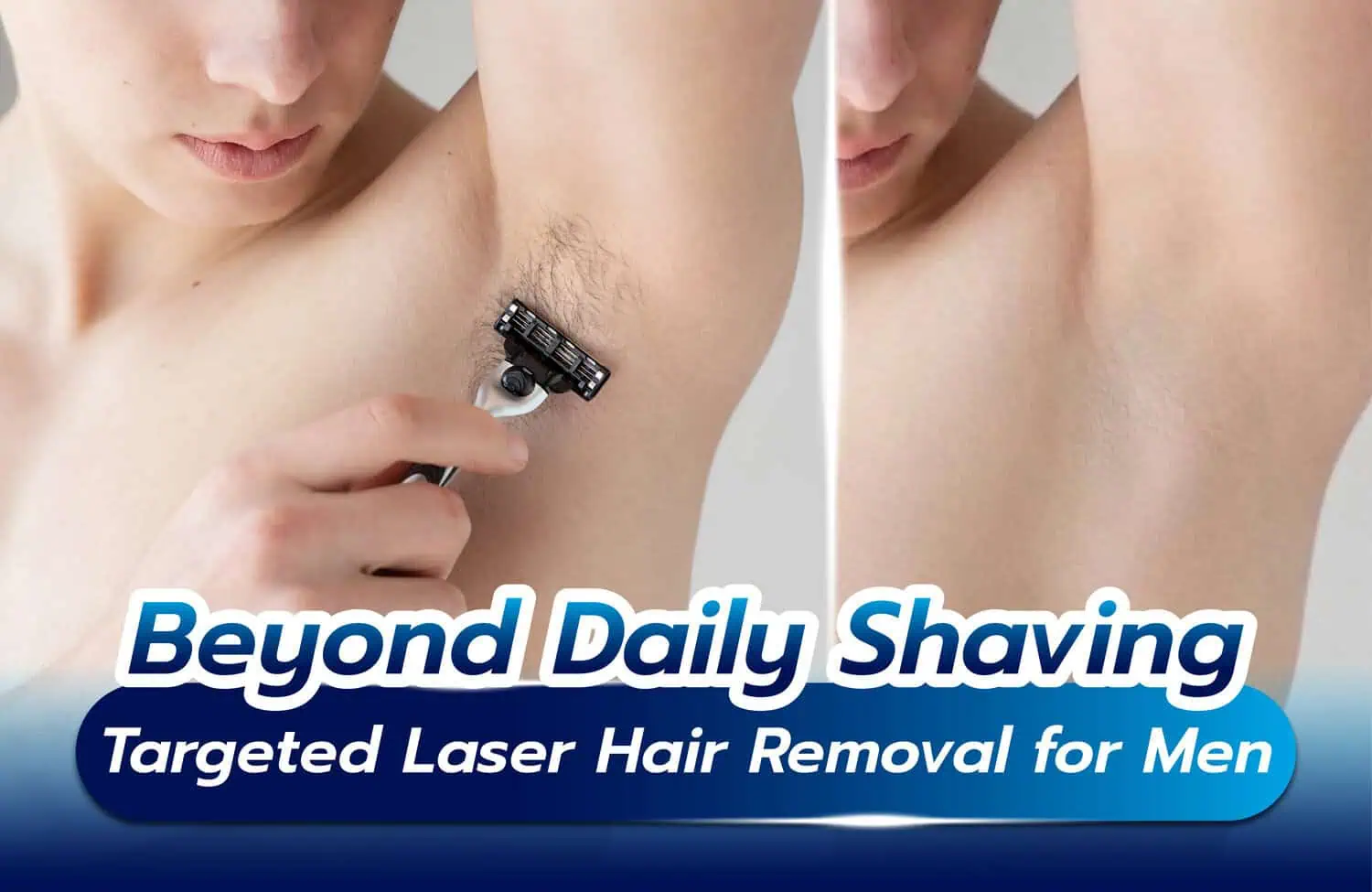
The method is adaptable and can entirely remove the upper lip hair or refine and contour a beard to maintain defined neckline and cheek edges between grooming sessions. A physician designs the pattern according to the desired appearance, whether that involves exposed skin or a more defined beard line.
Who Is a Good Candidate
The laser works by targeting pigment, which is why it responds best to brown and black facial hair. Gray, white, and blonde hair holds little pigment, so it is far harder to treat and often not suitable.
Skin tone matters less than it once did. Older systems suited light skin with dark hair, while newer lasers and careful settings now make treatment safe and effective for a much wider range of skin tones, including darker and Asian skin. A consultation determines if the treatment is suitable for your skin and hair. Individuals who are pregnant, using medication that increases light sensitivity, have an active skin infection, experience cold sores around the mouth, or have recently tanned should disclose this information beforehand, as these factors may affect safety on the lip and jaw.
How to Prepare for Your Session
A little preparation protects the skin and improves the result. In the two weeks before treatment, keep the area out of direct sun and avoid tanning beds, since tanned skin raises the risk of side effects.
Shave the area about 24 hours before the session. The laser needs the follicle root to stay in place, so avoid waxing, plucking, or threading in the weeks beforehand, as these remove the very target the laser is aiming for. It also helps to check the moustache laser hair removal price in advance, because the upper lip is usually treated as a course of several sessions rather than a one-off, and knowing the full cost makes the plan easier to commit to.
What Happens During Treatment, and Does It Hurt
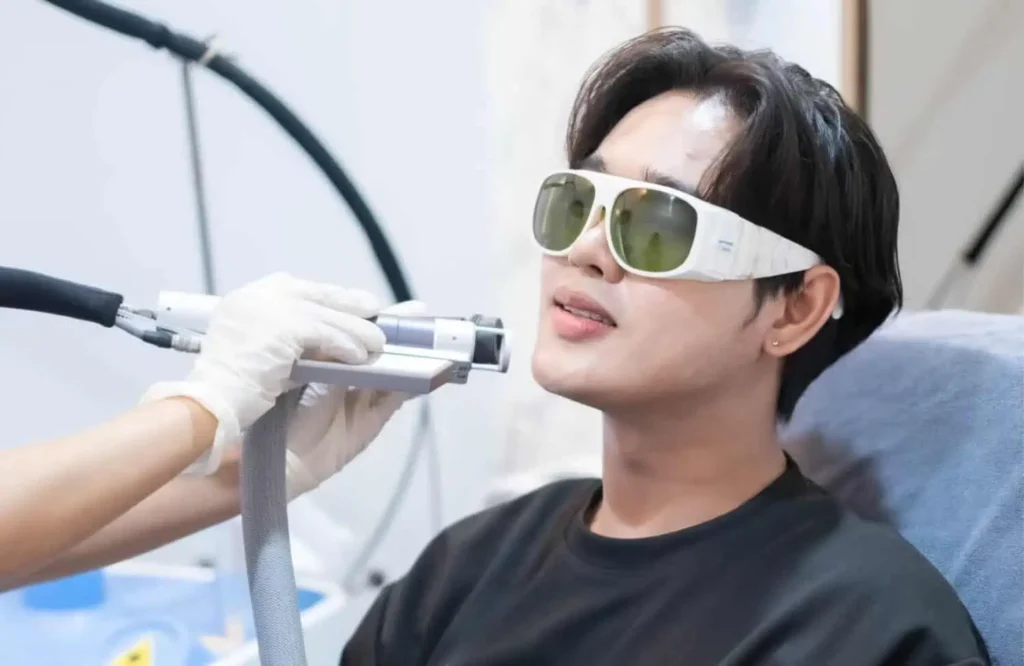
The procedure is swift; once the skin has been cleaned, everyone present wears protective eyewear, and the doctor applies the laser handpiece to the area in brief pulses, often accompanied by cooling to maintain skin comfort.
Does laser hair removal on the moustache hurt? Most people describe each pulse as a warm pinprick or a light rubber band snap against the skin. The upper lip is a sensitive spot, yet treating it takes only a few minutes, and cooling air or gel takes the edge off the sensation. Choosing beard laser hair removal in Bangkok also gives you access to doctor-led aesthetic care and modern equipment at competitive rates.
Recovery and How Long Results Last
Downtime is minimal. For a few hours after treatment the skin may look pink and slightly swollen, much like a mild sunburn, and a cool compress helps settle it. These effects usually fade within one to three days, and most people head straight back to their day.
How long does laser moustache hair removal last? The honest answer is that laser offers permanent hair reduction, which means a long-term, stable drop in the number of hairs that regrow, not the total removal of every hair forever. Many people stay smooth for months or even years, and when hair does return it tends to be finer and lighter. An occasional maintenance session keeps the area clear as stray follicles become active again. Results vary from person to person.
Why Choose TALISA Clinic for Facial Laser
The facial skin surrounding the mouth is delicate; therefore, both the practitioner and the equipment are as important as the treatment itself. TALISA Clinic is led by physicians, with each session evaluated and conducted by trained medical professionals who tailor the laser settings to your skin and hair instead of using a standard template. The treatment is conducted in a sterile, regulated clinical environment, with the device and settings selected to accommodate sensitive facial skin and various skin tones. Results may vary, with the doctor providing realistic expectations at the consultation.
TALISA Clinic has five branches, including Union Mall and Future Park Rangsit, open daily from 11:00 to 20:00, which makes regular sessions easy to keep up.
A Smoother Upper Lip, Planned Around You
Trading the daily razor for a planned course of treatment can mean less shaving, fewer ingrown hairs, and a cleaner beard line that holds between visits. The laser sets the pace, and a doctor’s judgment keeps it safe on sensitive facial skin.
Book a consultation at TALISA Clinic to find out whether moustache or beard laser hair removal is right for your skin and goals.
Book a consultation today for doctor-led facial laser hair removal:
LINE OA : @TALISAclinic
Instagram : TALISAclinic
Facebook : TALISA Clinic
Tel : 062-486-3626
References:
Laser Hair Removal: FAQs. American Academy of Dermatology. Retrieved October 21, 2026, from aad.org/public/cosmetic/hair-removal/laser-hair-removal-faqs
Laser Hair Removal. StatPearls, National Library of Medicine. Retrieved October 21, 2026, from ncbi.nlm.nih.gov/books/NBK507861
Frequently Asked Questions About Moustache Laser Hair Removal
Q: Does laser hair removal on the moustache hurt?
A: Most people feel a warm pinprick or a light rubber band snap with each pulse. The upper lip is sensitive, but the area is small and takes only minutes, and cooling air or gel helps keep it comfortable throughout.
Q: How long does laser moustache hair removal last?
A: Laser provides permanent hair reduction, a long-term drop in regrowth rather than total removal. Many people stay smooth for months or even years, with occasional maintenance sessions to catch hairs that become active again. Results vary from person to person.
Q: How should I prepare for moustache laser hair removal?
A: Keep the area out of the sun and off tanning beds for about two weeks beforehand, and shave roughly 24 hours before. Avoid waxing, plucking, or threading in the weeks before, since the laser needs the follicle root in place.
Q: Does moustache laser work on dark or Asian skin?
A: It can, when the right laser and settings are used. Modern systems treat a wide range of skin tones safely, including darker and Asian skin. A consultation confirms the right approach for your skin and hair color.
🔥 Botox Promotion


ทำความรู้จักผู้เขียน

Talisa Clinic Team
เราเชื่อว่า “ความงามที่แท้จริง คือตัวตนที่ดีที่สุดของคุณ” ทาลิสาคลินิกจึงออกแบบทุกบริการให้เหมาะสมกับรูปหน้า ลักษณะผิว และความต้องการของแต่ละคนอย่างเฉพาะเจาะจง พร้อมด้วยทีมแพทย์ผู้เชี่ยวชาญเฉพาะทางด้านเวชศาสตร์ความงาม ที่ผ่านการอบรมทั้งในและต่างประเทศ