






Key Takeaways
- Tear trough filler restores volume in areas under the eyes.
- It does not correct every dark circle, especially darkness from pigmentation or puffiness.
- Suitability depends on your anatomy, skin, degree of hollowing, and medical history.
- A doctor-led under-eye assessment at TALISA Clinic confirms whether under-eye filler fits your concern.
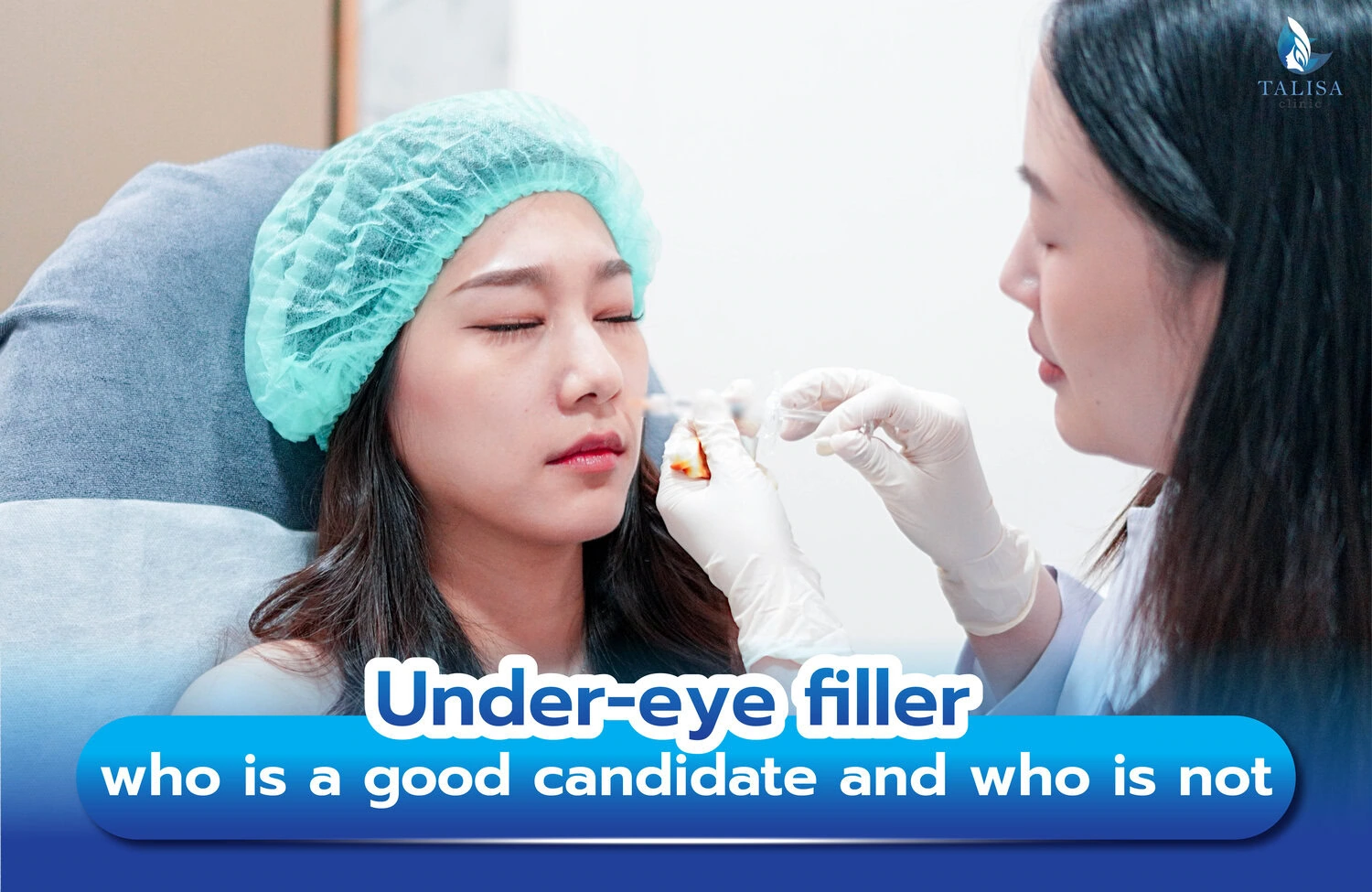
Tear trough filler restores volume in the infraorbital hollow that runs below the lower lid. It may be used to address some concerns around tired-looking under-eyes. Understanding the difference is the first step in deciding whether tear trough filler or under-eye filler is the right option.
A professional consultation is crucial before any under-eye filler treatment to determine suitability and avoid adverse side effects.
What Causes Under-Eye Hollows and Dark Circles?
Under eye hollows can make the periorbital area, or the region around the eye, look darker and more tired. However, not every dark circle comes from a lack of volume.
Understanding the causes behind darkening is the first step towards deciding the right treatment for your case.
- Volume loss: A loss of soft-tissue and periorbital fat volume can deepen the groove under the eyes. This physical indentation casts a persistent shadow that often looks like dark circles.
- Natural anatomy: Some people genetically have a more pronounced tear trough and lid-cheek junction, the boundary where the lower eyelid meets the cheek.
- Skin pigmentation: Hyperpigmentation, whether genetic or post-inflammatory, is an issue with the skin itself and may not improve with filler. Adding volume does not lighten pigment.
- Visible blood vessels and thin skin: Thin, translucent periorbital skin can let the underlying vasculature show through, giving a bluish or darker tone.
- Puffiness and bags: Orbital fat prolapse or fluid retention can create puffiness, or true eye bags. This may mimic a shadow but is a separate problem.
What Is Tear Trough Filler?

Tear trough filler uses an injectable dermal filler to add volume to selected hollow areas beneath the eyes. Hyaluronic acid (HA) fillers are commonly chosen for this delicate region because HA binds water and can be dissolved with an enzyme called hyaluronidase if a correction is needed.
The aim is to soften the lid-cheek junction where appropriate, placing small amounts of product rather than overfilling the area. Results, longevity, and suitability vary with the filler used and your individual anatomy, which is another reason a one-size approach does not work here.
Who Is a Good Candidate for Under-Eye Filler?
A few signs point to a strong candidate, though a doctor confirms suitability in person:
- A genuine volume deficit: People with visible under-eye hollows with a noticeable depression or loss of volume beneath the eyes.
- Shadow from hollowing: Darkness caused by shadowing from a true under-eye hollow, rather than pigment alone.
- Anatomy that suits added volume: Filler becomes an option when adding volume fits the structure of your under-eye region, for example, a defined tear trough with enough skin thickness to hold the result.
Who May Not Be a Good Candidate?
For some concerns, under-eye filler is the wrong tool:
People Whose Main Concern Is Pigmentation
Dark circles filler adds volume rather than lightening the skin. It may not help when the darkness comes from pigmentation. Pigment-led darkness, such as post-inflammatory hyperpigmentation, is usually addressed through other treatments, like topical brightening agents, chemical peels, or lasers, chosen after a doctor determines the cause.
People with Significant Bags or Puffiness
Adding filler may not suit prominent eye bags, festoons, or malar bags, the fluid-prone pads on the upper cheek. In people prone to fluid retention, HA filler can draw in water and leave an uneven or heavier appearance.
People with Medical or Treatment-Related Factors
A doctor also needs to know about anything that raises patient risk. Active skin problems, such as inflammation or infection around the area, should be addressed before any injection.
If you have any allergies or bleeding disorders, are on any current medications, or are pregnant or breastfeeding, you should also discuss this with your doctor.
Any previous cosmetic treatments should also be disclosed.
Why Under-Eye Filler Needs Careful Assessment
The periorbital skin is thin and carries important blood vessels, which is why precise placement matters.
Potential Side Effects
Most patients do not experience serious complications, but the under-eye area requires careful technique and patient selection. Understanding potential risks helps explain why assessment comes before treatment.
- Swelling, lumps, or unevenness: From imprecise placement in the thin under-eye skin.
- Tyndall effect: A bluish tint that appears when HA filler sits too superficially.
- Vascular occlusion: A rare but serious complication where filler blocks a vessel, which can affect vision.
What Happens During a Consultation?
At TALISA Clinic, a successful under-eye filler treatment starts with deciding whether filler is the correct treatment in the first place. During consultation, the doctor evaluates whether darkness comes from hollowing, pigmentation, thin skin, puffiness, or a combination of factors before making any recommendation.
The doctor also talks you through treatment goals, likely results, possible side effects, and alternatives. You should share your history of previous fillers, cosmetic procedures, medications, supplements, and relevant medical conditions, because each one shapes the plan and the safety of treatment.
To find out whether under-eye filler is a fit, book a doctor-led under-eye assessment at TALISA Clinic, with branches across Bangkok and Rangsit. We are open daily from 11:00 to 20:00.
Book a consultation with TALISA Clinic:
LINE OA : @TALISAclinic
Instagram : TALISAclinic
Facebook : TALISA Clinic
Tel : 062-486-3626
References:
Complications After Cosmetic Periocular Filler: Prevention and Management. Retrieved October 9, 2026, from https://pmc.ncbi.nlm.nih.gov/articles/PMC7583139
The Complete Safety Guide to Tear Trough Fillers: Risks, Recovery and Results. Retrieved October 9, 2026, from https://www.saveface.co.uk/en/blog/post/the-complete-safety-guide-to-tear-trough-fillers-risks-recovery-and-results
Tear Trough Filler Risks: What Safe Treatment Looks Like. Retrieved October 9, 2026, from https://www.healthandaesthetics.co.uk/advice/tear-trough-filler-risks-what-safe-treatment-looks-like/
Frequently Asked Questions About Tear Trough Filler (FAQs)
Q: Is under-eye filler suitable for everyone?
A: No. Suitability depends on your anatomy, skin, degree of hollowing, goals, and medical history. Some concerns, such as pigmentation or significant puffiness, may be better addressed another way, which is why an assessment comes first.
Q: Who is a good candidate for tear trough filler?
A: The best candidates have visible under-eye hollowing from volume loss, good enough skin quality, realistic expectations, and no medical factors that raise the risk of complications. A clinician confirms this in person.
Q: Can filler remove dark circles under the eyes?
A: Not always. Dark circles filler can soften shadows caused by hollowing, but it does not lighten pigmentation. If your darkness comes mainly from pigment, filler may not help and could make it look more noticeable.
Q: Is under-eye filler suitable for eye bags?
A: Often not. When the main issue is prominent bags or fluid retention, adding volume can worsen the appearance. A clinician will assess whether your concern is hollowing or puffiness before recommending anything.
Q: How long does under-eye filler last?
A: It varies with the product used and individual factors, and the result is not permanent. Your clinician can give a realistic range for your situation and explain when a review might be appropriate.
ทำความรู้จักผู้เขียน

Talisa Clinic Team
เราเชื่อว่า “ความงามที่แท้จริง คือตัวตนที่ดีที่สุดของคุณ” ทาลิสาคลินิกจึงออกแบบทุกบริการให้เหมาะสมกับรูปหน้า ลักษณะผิว และความต้องการของแต่ละคนอย่างเฉพาะเจาะจง พร้อมด้วยทีมแพทย์ผู้เชี่ยวชาญเฉพาะทางด้านเวชศาสตร์ความงาม ที่ผ่านการอบรมทั้งในและต่างประเทศ