





Key Takeaways
- Laser hair removal targets melanin in the hair follicle, so the laser’s wavelength decides how safe it is for your skin tone.
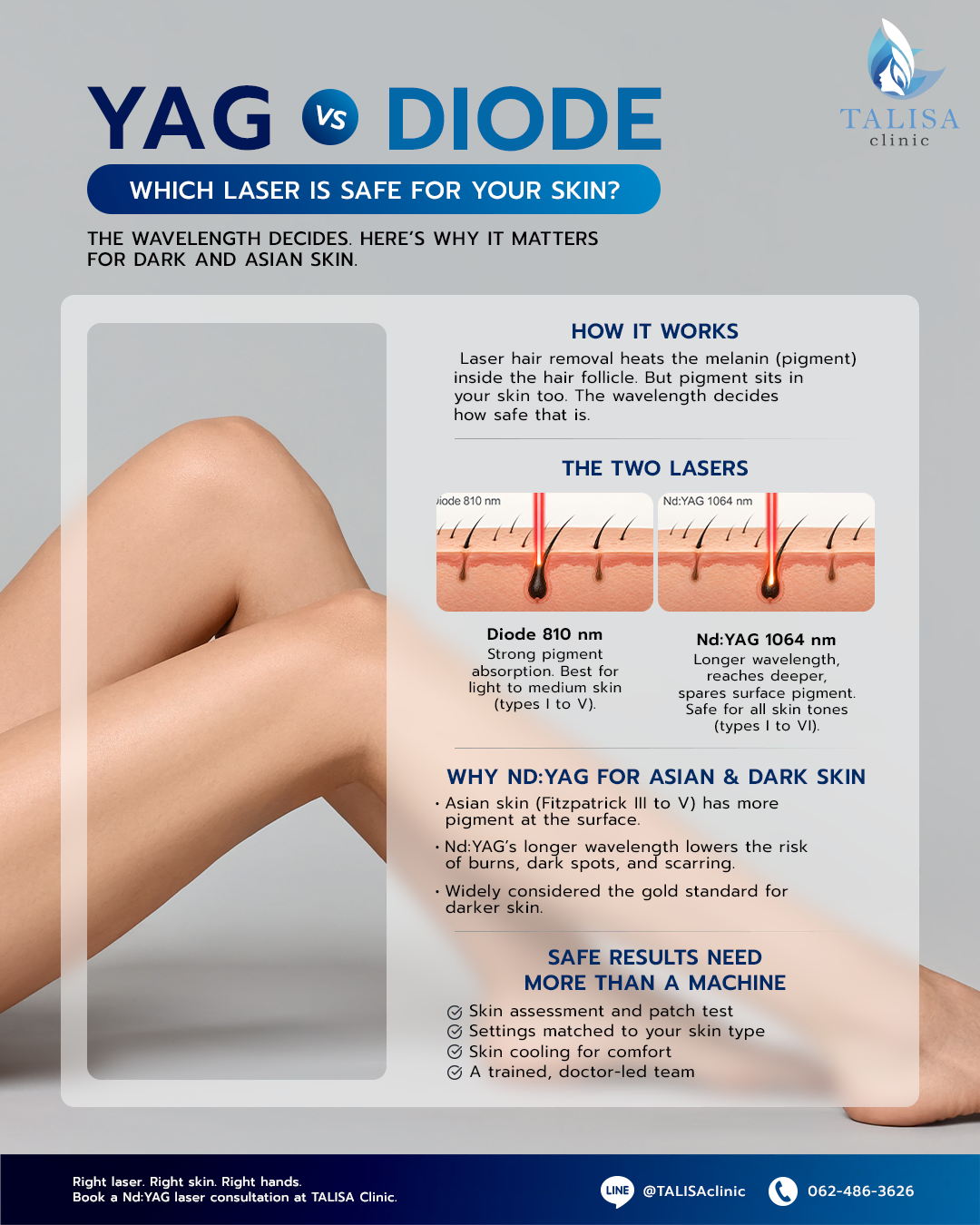
- The diode laser (810 nm) suits lighter to medium skin. The Nd:YAG laser (1064 nm) reaches deeper and is absorbed less by surface pigment.
- For Asian and darker skin, long-pulsed Nd:YAG is widely considered the safest and most effective option, with a lower risk of burns and dark spots.
- Settings, cooling, and a trained operator matter as much as the device, so a doctor-led clinic and a patch test come first.
Choosing the wrong laser for your skin tone can increase the risk of burns, irritation, and unwanted pigmentation changes. When comparing diode laser vs YAG, the most important factor is not which device is more powerful, but which one is safer for your skin. For Asian and darker skin tones, the Nd:YAG laser is often the preferred option because it targets the hair follicle while reducing interaction with surface pigment.
How Laser Hair Removal Targets the Follicle
Laser hair removal works by delivering light energy (photothermolysis) into the pigment inside each hair follicle. That energy turns into heat, damaging the follicle and slowing future hair growth. The challenge is that melanin exists in both hair and skin, which is why choosing the right wavelength becomes especially important for darker skin tones. If you’re researching Nd:YAG vs diode laser, the key difference comes down to wavelength, depth of penetration, and how much energy is absorbed by pigment in the skin.
The target here is melanin, the pigment that gives hair its color. The laser heats the pigment in the hair follicle enough to disable it, while the surrounding skin is left as unharmed as possible.
The catch is that melanin also sits in the skin itself, especially in darker and Asian skin tones. A wavelength that is strongly absorbed by pigment treats hair efficiently, but it can also pick up pigment at the skin surface. The wavelength a laser uses is what decides how this balance plays out, and it is the heart of the diode laser vs YAG question.
Diode Laser vs Nd:YAG: What Sets Them Apart
The diode laser works at 810 nm. It is well absorbed by melanin, penetrates to the follicle, and treats hair efficiently with less epidermal damage than older systems, which makes it a reliable choice for lighter to medium skin, broadly Fitzpatrick types I to V.
The Nd:YAG laser works at a longer wavelength of 1064 nm. That longer wavelength travels deeper and is absorbed less by the pigment near the skin surface, so it reaches the hair root while leaving more of the surface pigment untouched. Published guidance lists Nd:YAG as suitable across all skin types, from the lightest to the darkest, Fitzpatrick I to VI.
Neither wavelength is simply better than the other. Each is matched to the skin in front of the doctor, and the right settings, spacing, and cooling matter as much as the device itself.
|
Feature |
Diode (810 nm) |
Nd:YAG (1064 nm) |
|
Wavelength |
810 nm |
1064 nm |
|
How it reaches hair |
Strong melanin absorption, treats hair efficiently |
Longer wavelength, reaches deeper with less surface pigment absorption |
|
Best suited to |
Lighter to medium skin (types I to V) |
All skin tones, including the darkest (types I to VI) |
|
For darker and Asian skin |
Effective with careful settings and cooling |
Lowest risk of pigment-related side effects in deeply pigmented skin |
Why Nd:YAG Suits Darker and Asian Skin
Asian skin usually falls around Fitzpatrick types III to V, which means more melanin in the epidermis, the outer layer of the skin. While Asian skin contains more protective melanin, that same pigment can be more prone to post-inflammatory hyperpigmentation when excessive laser energy is absorbed near the skin surface. This is one reason laser selection matters so much for long-term cosmetic outcomes.
This is where the Nd:YAG wavelength helps. Because 1064 nm is absorbed less by surface melanin and reaches deeper, it lowers the chance that energy is wasted in the epidermis. Dermatology references widely describe the long-pulsed Nd:YAG as the preferred laser for deeply pigmented skin, and studies report treating Fitzpatrick types IV to VI with a good safety profile. That makes the long-pulsed Nd:YAG a safer laser for dark skin than wavelengths absorbed strongly at the surface.
That does not make hair removal on darker skin risk-free. Correct energy settings, a patch test, skin cooling, and a trained operator all protect the skin. A consultation, and often a test spot, should come before a full session. Anyone who is pregnant, is taking medication that increases light sensitivity, has an active skin infection, or has tanned recently should raise it before treatment, since these can change what is safe.
Choosing a Hair Removal Clinic for Asian Skin
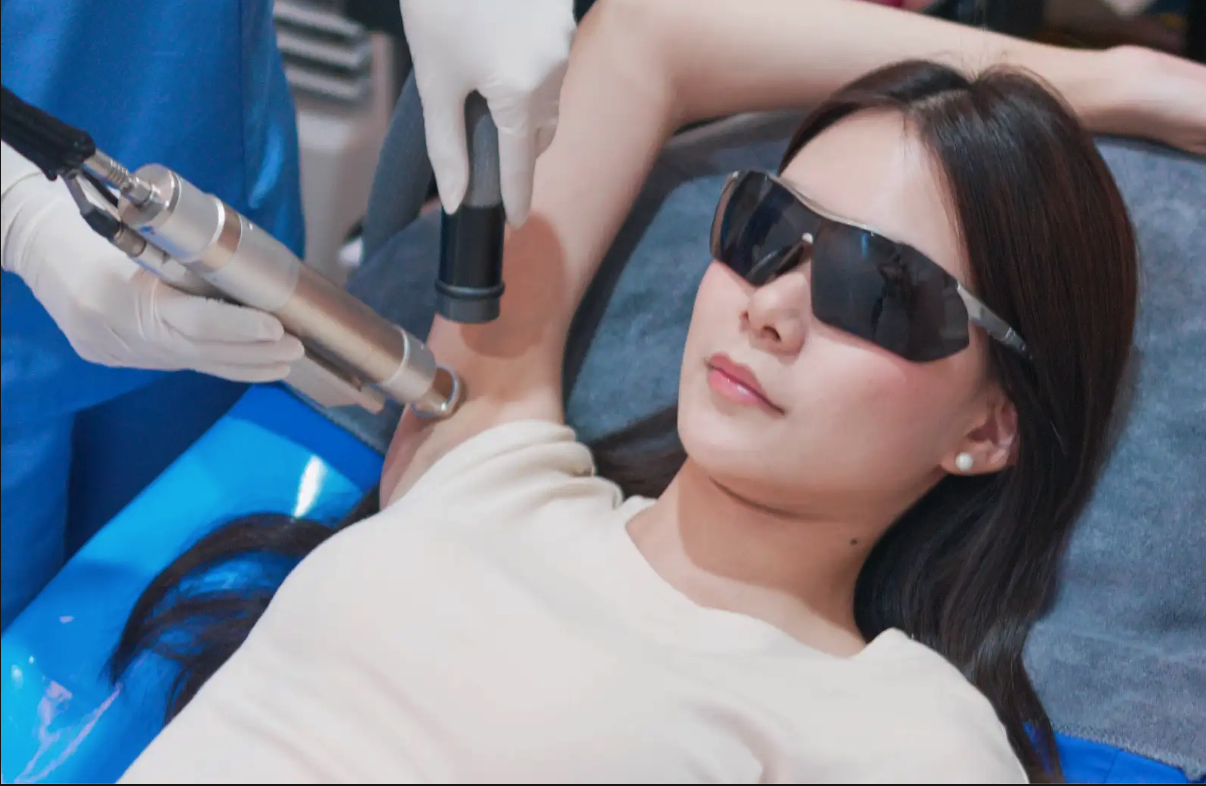
Results and safety on darker skin depend heavily on the operator and the device, so the clinic matters as much as the laser. A hair removal clinic that treats Asian skin regularly should assess your skin type, choose the wavelength and settings to match, and explain what to expect before starting.
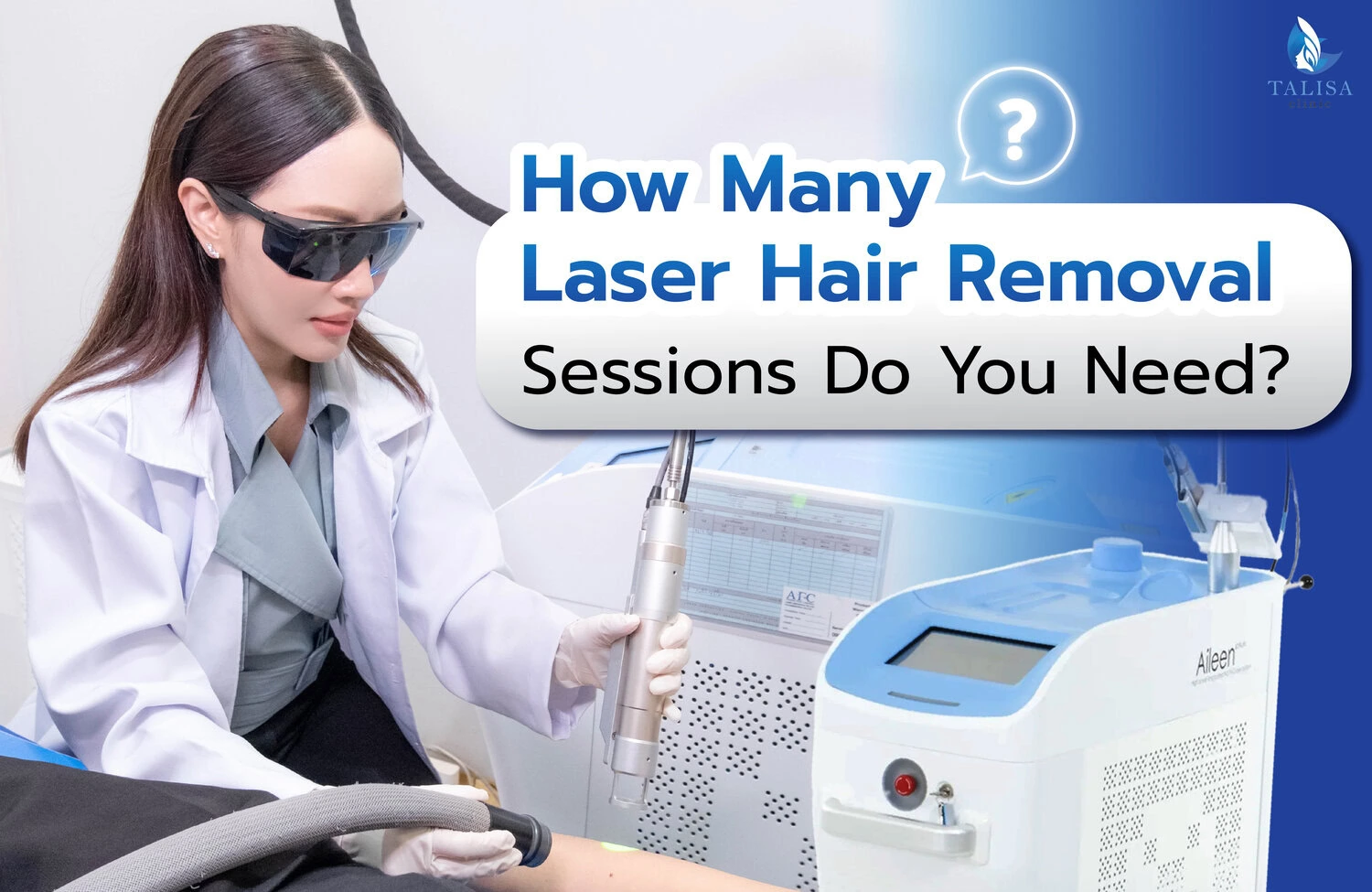
TALISA Clinic is a doctor-led clinic that uses the long-pulsed YAG laser for hair removal on Asian skin, the wavelength best suited to treating darker tones safely. Every plan starts with an assessment of your skin and hair, the settings are set to your skin type rather than a fixed template, and treatment is carried out by trained medical staff. Comfort during the session is supported by skin cooling, and results vary from person to person.
TALISA Clinic has five branches, including Union Mall and Future Park Rangsit, open daily from 11:00 to 20:00, so sessions are easy to fit into a routine.
The Safe Choice Comes Down to Wavelength and Skill
For lighter to medium skin, the diode laser is an effective option. For Asian and darker skin, the long-pulsed Nd:YAG is the one most often recommended for safe, effective results, because its longer wavelength reaches the follicle while sparing surface pigment. The safest laser for dark skin is not determined by wavelength alone. Treatment planning, skin assessment, cooling technology, and practitioner experience all play a role. While long-pulsed Nd:YAG is widely regarded as the safest option for Asian and darker skin tones, the best results happen when the technology is paired with experienced clinical judgment.
Book a consultation at TALISA Clinic to find out whether Nd:YAG laser hair removal is right for your skin and goals.
Book a consultation today for safe, doctor-led laser hair removal:
LINE OA : @TALISAclinic
Instagram : TALISAclinic
Facebook : TALISA Clinic
Tel : 062-486-3626
References:
Laser Hair Removal. Retrieved October 13, 2026, from ncbi.nlm.nih.gov/books/NBK507861
Chan CS, Dover JS. Nd:YAG laser hair removal in Fitzpatrick skin types IV to VI. Retrieved October 13, 2026, from pubmed.ncbi.nlm.nih.gov/23545924
Frequently Asked Questions About Diode Laser vs YAG
Q: Nd:YAG vs diode laser, which is better for dark skin?
A: For darker and Asian skin, the Nd:YAG laser is widely considered safer. Its 1064 nm wavelength is absorbed less by surface pigment and reaches deeper, which lowers the risk of burns and dark spots. The diode laser is effective for lighter to medium skin.
Q: Is Nd:YAG laser safe for Asian skin?
A: Yes, when performed correctly. Nd:YAG is suitable across all Fitzpatrick skin types, including the darker types common in Asian skin. Correct settings, skin cooling, a patch test, and a trained operator are what keep it safe.
Q: Does Nd:YAG laser hair removal hurt?
A: Most people feel a quick, warm snap with each pulse. Skin cooling during the session helps keep it comfortable. Sensation varies from person to person and with the area being treated.
Q: How is the diode laser different from Nd:YAG?
A: The diode laser uses an 810 nm wavelength and suits lighter to medium skin. The Nd:YAG uses a longer 1064 nm wavelength that reaches deeper and spares surface pigment, which makes it the preferred option for darker and Asian skin.
ทำความรู้จักผู้เขียน

Talisa Clinic Team
เราเชื่อว่า “ความงามที่แท้จริง คือตัวตนที่ดีที่สุดของคุณ” ทาลิสาคลินิกจึงออกแบบทุกบริการให้เหมาะสมกับรูปหน้า ลักษณะผิว และความต้องการของแต่ละคนอย่างเฉพาะเจาะจง พร้อมด้วยทีมแพทย์ผู้เชี่ยวชาญเฉพาะทางด้านเวชศาสตร์ความงาม ที่ผ่านการอบรมทั้งในและต่างประเทศ