






Key Takeaways
- Arm laser hair removal uses selective photothermolysis, where light absorbed by the hair’s melanin heats and damages the follicle.
- It usually needs a course of sessions rather than one visit.
- Whether it beats waxing or shaving depends on your budget, skin, hair, and how much upkeep you want to avoid.
- A consultation with TALISA Clinic confirms whether your hair and skin suit laser.
Common ways to remove arm hair include shaving, waxing, and laser hair removal. They focus on hair and influence regrowth speeds in various ways. Arm laser hair removal targets the follicle and slows regrowth over time, which suits people who want less regular upkeep. This guide covers how it compares with the alternatives, what affects suitability, and how to prepare for your first session.
What Is Arm Laser Hair Removal?
Laser hair removal works by selective photothermolysis: the laser emits light at a wavelength that specifically targets melanin, the pigment in the hair. That light converts to heat and damages the follicle to reduce future growth. On the arms, treatment can cover different sections depending on your goal.
- Treatment areas: You can usually treat the upper arms, the forearms, or the full arms, and the exact area is confirmed at consultation.
- Typically requires a full course: Several sessions are normally needed, because hair grows in cycles and the laser mainly affects follicles in the anagen, or active growth, phase.
- Results may vary: Outcomes depend on hair color, skin tone, coarseness of hair, hormonal factors, and the laser used.
Which Areas of the Arms Can Be Treated?
- Upper arms: For reducing visible hair between the shoulders and the elbows.
- Forearms: For those who prefer less visible hair from the elbows to the wrists.
- Full arms: For people who want hair reduction across both the upper arms and forearms, with the hands or fingers confirmed separately.
Laser Arm Hair Removal vs. Waxing or Shaving
Your budget, skin sensitivity, hair type, and willingness to maintain determine the best method. This is a comparison of the three arm hair removal methods.
Method | How long it lasts | Upkeep | Disadvantages |
Shaving | Days | Frequent, at home | Cheapest upfront, but quick regrowth and possible irritation |
Waxing | Weeks | Regular salon or at-home sessions | Smoother for longer, but can cause ingrown hairs and discomfort |
Laser | Longer-term reduction | A course, then occasional maintenance | Higher upfront cost and several sessions, aimed at lasting reduction |
Table: Laser Arm Hair Removal vs. Waxing or Shaving.

When to Consider Laser Hair Removal for Your Arms
- You want lasting reduction: You would rather reduce regrowth over time than remove visible hair repeatedly.
- Upkeep is a burden: Frequent shaving or waxing is inconvenient for your routine.
- Realistic expectations: You understand laser usually needs several sessions and does not guarantee removal of every hair.
When to Consider Waxing or Shaving Instead
- Lower upfront cost: You prefer a cheaper option or one you can do at home.
- Occasional removal: You only want to remove arm hair now and then.
- Hair or skin factors: Your hair color or skin characteristics make laser less suitable for the available technology, something a clinician can assess.
What to Expect During a Session
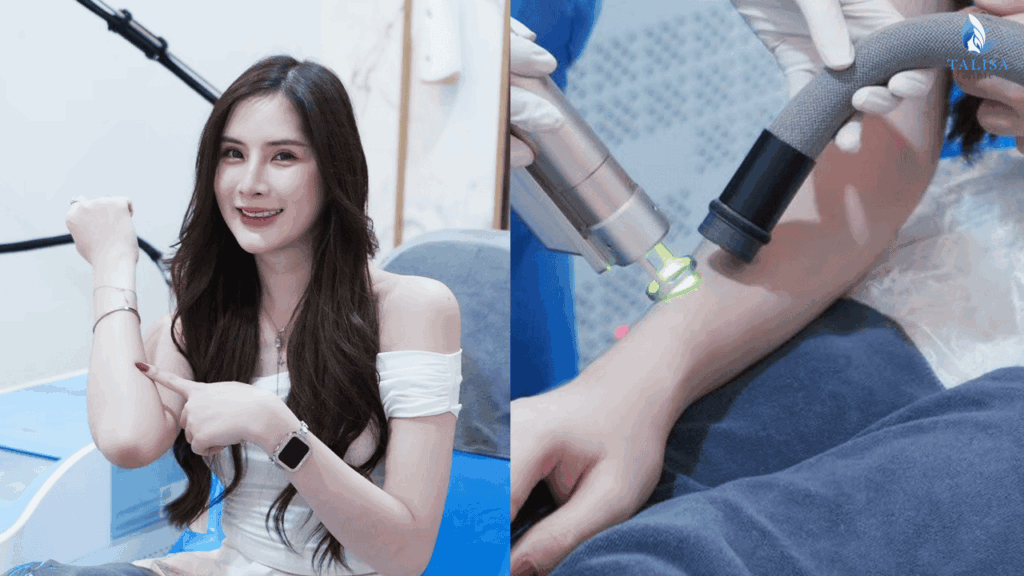
Before the Treatment
- Assessment: A certified practitioner reviews skin tone, hair color, medical and skin history, current medications, and previous reactions to hair removal.
- Explanation: The practitioner explains the technology, the expected course, possible side effects, and aftercare.
- Skin check: The area is examined for irritation, tanning, or other factors that could affect suitability.
During the Treatment
- Preparation: The skin is prepared to the clinic’s protocol, and protective eyewear is worn.
- The sensation: Many people describe a brief snapping or warm feeling against the skin as the laser is applied.
- Timing: Session length depends on the size of the area and the equipment used.
After the Treatment
- Normal reactions: Temporary redness, warmth, or perifollicular edema, mild swelling around the follicles, may occur.
- Aftercare: Follow the clinic’s instructions and avoid unnecessary irritation of the area.
- Gradual shedding: Hair may shed over the following days or weeks rather than disappearing at once. Judge results over the full course, not after one session.
How to Prepare for Your First Session
You can prepare for your first arm laser hair removal session with the following steps:
Before Your Appointment
- Avoid tanning: Protect the area from strong sun and tell the practitioner about any recent tanning.
- Pause waxing and plucking: These remove the hair the laser needs to target. Ask the clinic how long to stop beforehand.
- Shave as instructed: Clinics commonly ask you to shave shortly before the appointment, often within 24 hours, but follow their specific guidance.
- Review products and medication: Mention prescription medicines, topical products, and any history of light sensitivity.
- Arrive with clean skin: Follow the clinic’s advice on moisturizer, deodorant, or other products in the area.
- Flag skin concerns: Report active rashes, cuts, infections, recent sunburn, or a history of unusual scarring first.
Questions to Ask Before Your First Session
A few worth raising at your consultation:
- Which laser suits my skin tone and hair color?
- How many sessions might I need, and how far apart?
- What results are realistic for my arm hair?
- What is included in the price?
- Do I need maintenance sessions?
Who Is a Suitable Candidate?
A few criteria may be used to determine whether or not arm laser hair removal is right for you:
- Seeking longer-term reduction: People who want to cut down regular arm-hair upkeep may be candidates, subject to assessment.
- Enough pigment to target: Laser relies on melanin in the hair, and dark, coarse hair responds best. Very light, white, gray, or red hair may respond poorly to some systems.
- Skin tone considered: Different Fitzpatrick skin types need different wavelengths and settings, which is why a long-pulsed Nd:YAG is often chosen for medium to deep skin tones.
- Timing factors: Recent tanning, certain skin conditions, light sensitivity, or some medications may call for extra assessment or a delay.
A consultation helps determine suitability and lowers the risk of burns, pigment changes, and other adverse effects.
Arm Laser Hair Removal at TALISA Clinic
Arm laser hair removal targets the follicle, so hair grows back finer and slower. It takes a course of sessions spaced a few weeks apart. Most people feel a light snap rather than real pain. Results hold with consistent spacing and aftercare.
At TALISA Clinic, arms are treated with a long-pulsed Nd:YAG laser at 1,064 nm by a doctor. This wavelength penetrates the follicle but leaves the epidermis, the skin’s outer layer, unharmed, making it appropriate for various Fitzpatrick skin types. A doctor assesses your skin and hair and sets the energy, or fluence, for your case. Visit any one of TALISA Clinic’s branches across Bangkok and Rangsit, open daily from 11:00 to 20:00.
To cut arm-hair upkeep for good, book an arm laser consultation at TALISA Clinic, where a doctor plans your course and confirms the price for the areas you want treated.
Book a consultation with TALISA Clinic:
LINE OA : @TALISAclinic
Instagram : TALISAclinic
Facebook : TALISA Clinic
Tel : 062-486-3626
References:
Laser Hair Removal: FAQs. Retrieved October 9, 2026, from https://www.aad.org/public/cosmetic/hair-removal/laser-hair-removal-faqs
Laser and Light Treatments for Hair Reduction in Fitzpatrick Skin Types. Retrieved October 9, 2026, from https://www.springermedicine.com/laser-and-light-treatments-for-hair-reduction-in-fitzpatrick-ski/22248120
How Do Lasers Remove Hair?. Retrieved October 9, 2026, from https://www.scienceabc.com/eyeopeners/how-do-lasers-remove-hair
Frequently Asked Questions About Arm Laser Hair Removal (FAQs)
Q: Is laser hair removal on the arms worth it compared with waxing or shaving?
A: It may suit people who want longer-term hair reduction and less frequent upkeep. Waxing and shaving usually cost less upfront but need ongoing maintenance. The right choice depends on your budget, hair and skin characteristics, and the result you want.
Q: How should I prepare for my first arm laser hair removal session?
A: Avoid tanning, stop waxing or plucking for the period your clinic advises, and shave the area as instructed. Arrive with clean skin, disclose relevant medications and skin conditions, and follow any extra guidance from your consultation.
Q: How many arm laser hair removal sessions will I need?
A: Several sessions are usually needed, because laser works best on hairs in particular growth stages. The number and spacing depend on your hair growth, the area, your skin and hair characteristics, and the laser used.
Q: Is arm laser hair removal painful?
A: Sensation varies by person and device. Some people feel a brief snapping, warmth, or stinging during treatment. Tell the practitioner if it feels excessive so they can check the settings and your comfort.
Q: Can I shave my arms between laser sessions?
A: Shaving is generally fine between sessions, because it cuts hair at the surface without removing the root. Avoid waxing or plucking unless your practitioner advises otherwise, since those remove the hair the laser targets.
🔥 Botox Promotion


ทำความรู้จักผู้เขียน

Talisa Clinic Team
เราเชื่อว่า “ความงามที่แท้จริง คือตัวตนที่ดีที่สุดของคุณ” ทาลิสาคลินิกจึงออกแบบทุกบริการให้เหมาะสมกับรูปหน้า ลักษณะผิว และความต้องการของแต่ละคนอย่างเฉพาะเจาะจง พร้อมด้วยทีมแพทย์ผู้เชี่ยวชาญเฉพาะทางด้านเวชศาสตร์ความงาม ที่ผ่านการอบรมทั้งในและต่างประเทศ